Mastering the Agentic Workflow: Moving Beyond Simple Prompts in 2026
If you are still using your AI coding assistant as an advanced autocomplete or a slightly smarter StackOverflow search, you are missing out on the biggest paradigm shift of 2026: Agentic Workflows.
Vibecoding has evolved. We are no longer simply “prompting.” We are orchestrating. Here is how to transition from requesting isolated tasks to managing autonomous agents that can build entire systems.
What is an Agentic Workflow?
A simple prompt is a one-and-done interaction: “Write a Python script to scrape this website.”
An agentic workflow is a system that can plan, execute, evaluate, and iterate autonomously. Instead of asking for a script, you define a goal, provide the tools, and let the agent loop until the objective is met.
“Build a pipeline that scrapes this website daily, stores the results in Postgres, and pings a Slack channel if the schema changes. Write the code, run tests to verify the scraping logic, and fix any errors that arise during testing.”
The Core Principals of Orchestration
To master this workflow in your IDE (like Windsurf or Cursor’s Composer), you need to change how you communicate with the AI.
1. Give the Agent a Persona and a Goal
Agents need context. Start by explicitly defining their role:
“You are an expert DevOps engineer and backend developer. Your ultimate goal is to establish a secure, scalable authentication flow for this Astro application using NextAuth.”
2. The Power of “Plan First, Code Later”
Never let an agent start writing application code blindly. Always mandate a planning phase.
“Before writing any implementation code, outline your step-by-step plan in a Markdown document. Once I approve the plan, you may begin executing Step 1.”
This prevents the agent from hallucinating down a rabbit hole and destroying your git history.
3. Implement Verification Loops
Agents make mistakes. An agentic workflow anticipates this by forcing the AI to verify its own work.
“After implementing the login functionality, write an integration test. Run the test command
npm run test:auth. If the test fails, analyze the terminal output, implement a fix, and rerun the test. Do not stop until the test passes.”
Tools like Windsurf’s Cascade are built specifically for these terminal-integrated feedback loops.
Dealing with Context Degradation
The biggest hurdle in agentic workflows is context degradation—when the AI “forgets” earlier instructions or the overarching architecture after several loops.
Mitigation strategies:
- Pin core files: Always keep your
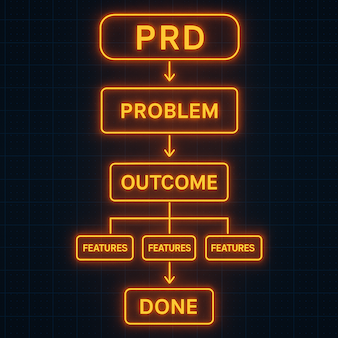
prd.md,architecture.md, and.cursorrulespinned or actively referenced in the context window. - Micro-Agents: Break massive tasks down. Instead of asking one agent to build the entire app, ask it to exclusively build the database layer. Then, start a new session with a clean context window and ask it to build the frontend, passing it the finished database schema as reference.
- The “Summarize and Restart” technique: When a chat gets too long, ask the AI: “Summarize the current state of the application, what has been completed, and what remains.” Copy that summary, open a fresh chat, paste it in, and say: “Continue from here.”
Embracing the Conductor Mindset
Mastering the agentic workflow requires giving up the ego of the “lone wolf programmer.” You are no longer writing every semicolon. You are the conductor of an orchestra.
Your job in 2026 is design, architecture, review, and orchestration. The better you get at defining the boundaries, providing clear goals, and establishing feedback loops for your AI agents, the faster and more robust your software will become.